

The history of SanDamianoDA?
_fe2e09d2.jpg)


A choice of the Municipality of Asti
The city of San Damiano d'Asti was founded in 1275 by order of the Municipality of Asti. After their victory over the Angevins at Roccavione, the people of Asti destroyed all their enemies' strongholds, laying siege to Alba and demolishing all the castles of Astixio, the powerful municipality to the left of the Tanaro River, accused of having allied themselves with Charles of Anjou. The Ghibelline Garetti family held fiefdoms in the Astixio consortium, specifically the castles of Gorzano, Castelnuovo, and Lavezzole.


The village of Marcellengo
Today known as Torrazzo, it is governed by the Benedictines but has Asti influence. All these defenses were destroyed by the Asti people, who took advantage of their victory over the Angevins to eliminate their ambitious neighbor: they forced the vanquished to build a new villa in the friendly territory of Marcellengo, dismantling the old fortress. They chose the plain where the ancient Marcellengo market was held and where the small church of San Damiano once stood.


A perfect geometry
The perfect geometry of the historic center tells us how the people of Asti chose to build a defensive oppidum to protect themselves from Alba: the fortified villa nova quickly became populated, becoming one of the cornerstones of Asti's defensive system. San Damiano remained tied to Asti, almost a village "extra muros," and over the following centuries it experienced its changing fortunes amidst the many conflicts. Following the Peace of Cherasco in 1631, San Damiano passed into the hands of many illustrious figures until the late 19th century.


A choice of the Municipality of Asti
The city of San Damiano d'Asti was founded in 1275 by order of the Municipality of Asti. After their victory over the Angevins at Roccavione, the people of Asti destroyed all their enemies' strongholds, laying siege to Alba and demolishing all the castles of Astixio, the powerful municipality to the left of the Tanaro River, accused of having allied themselves with Charles of Anjou. The Ghibelline Garetti family held fiefdoms in the Astixio consortium, specifically the castles of Gorzano, Castelnuovo, and Lavezzole.

A choice of the Municipality of Asti
The city of San Damiano d'Asti was founded in 1275 by order of the Municipality of Asti. After their victory over the Angevins at Roccavione, the people of Asti destroyed all their enemies' strongholds, laying siege to Alba and demolishing all the castles of Astixio, the powerful municipality to the left of the Tanaro River, accused of having allied themselves with Charles of Anjou. The Ghibelline Garetti family held fiefdoms in the Astixio consortium, specifically the castles of Gorzano, Castelnuovo, and Lavezzole.

A choice of the Municipality of Asti
The city of San Damiano d'Asti was founded in 1275 by order of the Municipality of Asti. After their victory over the Angevins at Roccavione, the people of Asti destroyed all their enemies' strongholds, laying siege to Alba and demolishing all the castles of Astixio, the powerful municipality to the left of the Tanaro River, accused of having allied themselves with Charles of Anjou. The Ghibelline Garetti family held fiefdoms in the Astixio consortium, specifically the castles of Gorzano, Castelnuovo, and Lavezzole.
San Damiano d'Asti
Standard-bearing lands -
the gateway between Monferrato and Roero
San Damiano d'Asti
Standard-bearing lands -
the gateway between Monferrato and Roero
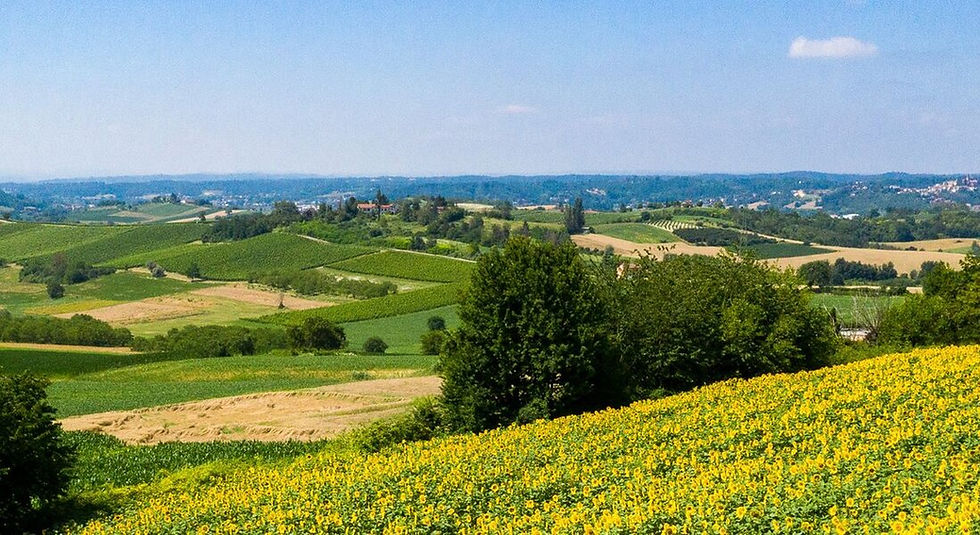
Our town sits on a low hill on the left bank of the Borbone River and is made up of three large hamlets that have expanded around the historic center: Borgo Rondò, Borgo Piano, and Borgo San Rocco. Numerous farmhouses and village hamlets are scattered among the vineyards.